


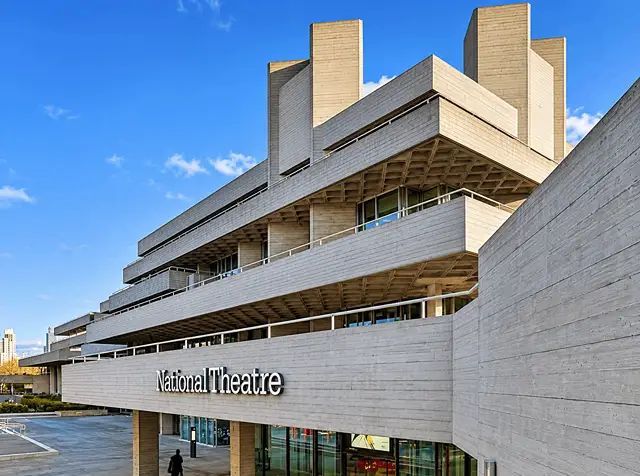
The National Theatre is to team up with 12 regional theatres on a four-year programme aimed at giving more than 100,000 young people across England access to live theatre, training and a route into creative careers. Culture Secretary Lisa Nandy announced the scheme, called National Theatre Nationwide, at an event at the National Theatre in London, where she was joined by actors including Jim Carter, Adjoa Andoh, Adrian Lester, Imelda Staunton and Sir Ian McKellen.
Up to £15 million of government funding is being committed through the Every Child Can programme, with the National Theatre working alongside The National Lottery Community Fund. According to the partner theatres, that money comes from the Dormant Assets Scheme over four years and, combined with funding the National Theatre has secured itself, brings the total investment in the programme to £27 million.
What National Theatre Nationwide Will Offer
The programme is built around getting young people into theatres, and into schools, in places where live drama can be hard to reach. Partner theatres will offer thousands of subsidised £10 tickets, and productions designed for young audiences will tour 400 schools. The partners say the targeted tickets will let 16,000 young people see National Theatre productions at their local venue, and that one major National Theatre main stage production will now tour to partner venues each year.
Alongside the shows, young people will be able to explore acting, directing, playwriting and backstage roles, with workshops and training meant to introduce them to careers both on stage and behind the screen. A Skills Roadshow will visit areas that have no theatre of their own, and a new music theatre programme will help local young people devise, produce and perform original community productions.
The partners also set out headline targets: five National Theatre schools tours over four years reaching 45,000 young people, 20,000 young people taking part in the National Theatre’s annual Connections youth theatre festival, and 6,000 young writers reached through its New Views playwriting programme.
The 12 Partner Theatres Across England
The National Theatre will work with the Lowry in Salford, Newcastle Theatre Royal, Leeds Heritage Theatres, Sheffield Theatres, Nottingham’s Theatre Royal and Royal Concert Hall, Curve in Leicester, Birmingham Hippodrome, the Belgrade Theatre in Coventry, Norwich Theatre, Theatre Royal Plymouth, Southampton’s Mayflower Theatre and the Marlowe Theatre in Canterbury. Between them they cover every English region, and each partner will choose the parts of the programme that suit its own community, working alongside the National Theatre.
Young people are also meant to have a say in how it works. A new Nationwide Youth Council will help shape the design and delivery of activities, and the partners say ten Youth Manager roles will be based in theatres outside London.
Why the Government and Theatres Say It Matters
Nandy said she was tired of being told that not everyone can or should have access to the best of what the country has to offer, arguing that enjoying theatre should not depend on being able to afford it or on being born in the right postcode. Kate Varah, the National Theatre’s executive director and co-chief executive, made a similar point, saying a young person’s chance to benefit from theatre should not hinge on their postcode or their family’s means.
Sir Ian McKellen welcomed the idea of the National Theatre taking its work around the country. He noted that live theatre is becoming more expensive, and said he hoped theatre-going would become “a habit rather than an occasional adventure” for young people who live far from London.
The partners also point to a skills gap in the sector. They cite DCMS data showing that 30% of cultural-sector job vacancies are affected by skills shortages, and research from Ravensbourne University finding that 75% of 18 to 25-year-olds want to work in creative sectors while 42% say entry-level opportunities are too hard to find.
Part of a Wider Youth Funding Push
The announcement sits within the government’s wider plan to improve opportunities for young people growing up in England. Ministers also confirmed a further £106 million from the Dormant Assets Scheme for Every Child Can, taking its total funding to £238.5 million. The remaining £173 million is due to open to organisations across England in 2027, and the Every Child Can Fund, designed by The National Lottery Community Fund with young people and the youth sector, is due to launch in spring 2027.
Separately, the first £20.7 million of the £450 million Youth Matters Fund is going to 60 local authority areas, from Middlesbrough and Oldham to coastal communities such as Skegness and King’s Lynn. The government has also committed funding for 1,000 new youth workers and trusted adults.
What Happens Next
The funding is not yet fully locked in. Ministers have asked The National Lottery Community Fund to work with the National Theatre to scrutinise and develop its plans, and both the money granted and the way the programme is delivered remain subject to the outcome of that Fund’s formal solicitation process, which is still under way.
If the plans clear that process, the programme will combine National Theatre touring productions, school visits, training and youth-led projects across all nine English regions, with the stated aim of reaching more than 100,000 young people over four years.