

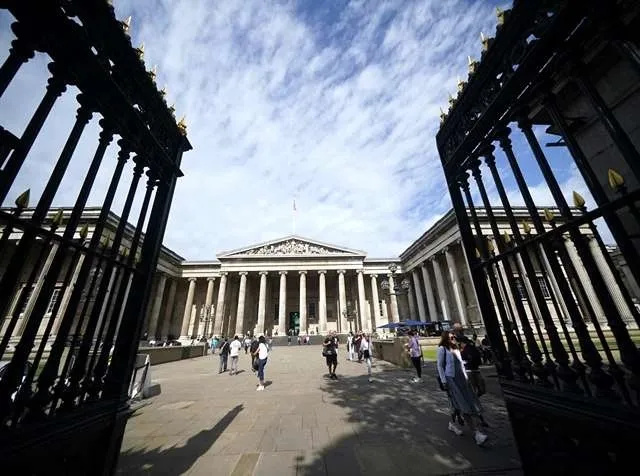
The British Museum postponed a planned lecture on ancient Israel and Judah that was scheduled as part of the UK’s first Jewish Culture Month after concerns emerged that a significant number of registered attendees intended to disrupt the event. The lecture, which was due to be delivered by Dr. Paul Collins, keeper of the Department of the Middle East, was intended to explore the history, archaeology and cultural development of ancient Israel and Judah through objects held in the museum’s collection.
Museum officials announced the postponement less than 24 hours before the event was due to take place. In a public statement, the museum said it had received information suggesting that a “significant proportion” of attendees planned to deliberately interfere with the lecture, preventing others from participating in good faith and undermining the purpose of the programme.
The British Museum stated that the decision was reached after discussions with organisers and security partners. Officials stressed that while they fully recognised the importance of lawful protest and freedom of expression, they also had a responsibility to ensure events could proceed safely and without intimidation for speakers, staff and visitors.
The lecture formed part of Jewish Culture Month, a nationwide initiative celebrating Jewish history, culture and creativity through events hosted by major institutions across Britain. The museum emphasised that the postponement did not represent a withdrawal of support for the programme and said it remained committed to hosting the event at a later date under conditions that protect both the audience experience and the integrity of the discussion.
Officials later confirmed that the event would be rescheduled and would likely include a livestream to allow broader participation while addressing security concerns.
Gaza War Tensions Continue Influencing Cultural Institutions
The controversy surrounding the lecture reflects broader tensions across Britain linked to the ongoing conflict involving Israel and Gaza. Since the outbreak of the war, cultural institutions, universities and public organisations have increasingly faced disputes over events connected to Jewish history, Israel and Palestinian issues.
According to reports, critics of the lecture argued that discussions involving ancient Israel at publicly funded institutions could be interpreted as politically sensitive because of current events in the Middle East. Activist groups questioned aspects of how historical narratives connected to Israel are presented in museums and public programmes.
The British Museum itself has already faced scrutiny in recent months over its handling of terminology and historical displays connected to the ancient Middle East. Earlier debates emerged after the museum revised descriptions relating to ancient Palestine, Canaan and the kingdoms of Israel and Judah, prompting competing accusations from different political and activist groups.
The wider political atmosphere has also become increasingly charged because of repeated pro-Palestinian demonstrations across London and growing concerns about antisemitism. Britain has experienced intense public debate surrounding the Gaza conflict, with large protests, counter-protests and disputes over freedom of expression becoming regular features of political life.
Museum officials maintained that the postponement was based specifically on security and disruption concerns rather than political pressure. They argued that educational and cultural programmes should be able to proceed in an environment where participants can engage respectfully without intimidation or deliberate interference.
The incident nevertheless highlighted how historical, archaeological and cultural discussions linked to Jewish identity and Israel are increasingly being affected by contemporary geopolitical tensions.
Jewish Leaders and Politicians Condemn the Decision
The postponement prompted strong criticism from Jewish organisations, historians, political figures and free speech advocates who argued that the museum had effectively yielded to threats of disruption. Several critics described the decision as a troubling sign that publicly funded institutions were becoming reluctant to host events connected to Jewish history.
The Campaign Against Antisemitism described the decision as a victory for those seeking to silence Jewish cultural expression. The Board of Deputies of British Jews also expressed concern, arguing that extremist efforts to disrupt Jewish Culture Month events should not be allowed to prevent the public from engaging with Jewish heritage and scholarship.
A number of prominent public figures criticised the museum’s response. Historian Simon Schama reportedly described the decision as “cowardice,” while broadcaster John Simpson called it “pathetic.” Historian Simon Sebag Montefiore said the episode reflected “dark times” for public cultural debate.
Political criticism also emerged from across the spectrum. Conservative leader Kemi Badenoch and shadow attorney general Lord David Wolfson argued that cultural institutions should not cancel or postpone historical events because of fears of organised disruption. Critics warned that doing so risks encouraging future attempts to silence controversial discussions through intimidation.
Several commentators argued that the lecture focused on ancient history rather than modern politics and therefore should have been protected from disruption. They said that even if a subject is controversial it is the duty of museums to protect academic discourse and historical inquiry.
The fallout transformed what should have been a simple scheduling decision into a broader national conversation about antisemitism, free speech and the role of public institutions.
Debate Intensifies Over Free Speech, Protest and Public Safety
The controversy has fueled a broader debate over how cultural institutions balance free speech, the right to protest and security concerns. The British Museum insisted that it continues to support Jewish Culture Month and stressed that the decision was intended to protect the event rather than diminish it.
Supporters of the postponement argued that institutions have a duty to ensure that events can take place safely and that organisers should not ignore credible warnings about planned disruption. Museum officials maintained that safeguarding visitors, speakers and staff remained their highest priority.
But others disagreed, saying that delaying the lecture sets a precedent in which organised campaigns of pressure are able to determine what events can go ahead. Critics said that public institutions should be prepared to defend controversial discussions, rather than cancel them in the face of opposition.
The debate also reflects broader concerns about rising antisemitism in Britain. Jewish organisations have repeatedly warned about increasing hostility toward Jewish communities since the Gaza conflict intensified. Recent attacks on Jewish sites and heightened security concerns have contributed to rising tensions around public events associated with Jewish culture and identity.
Meanwhile, pro-Palestinian activists contend that public institutions must be open to criticism and debate about historical and political narratives related to Israel. Some groups asked if the event did enough to address competing perspectives on the region’s history.
The British Museum said the lecture would be rescheduled in the coming weeks with additional security measures and wider access through livestreaming. The outcome is likely to remain a significant test of how major cultural institutions navigate increasingly polarised political and social debates.