

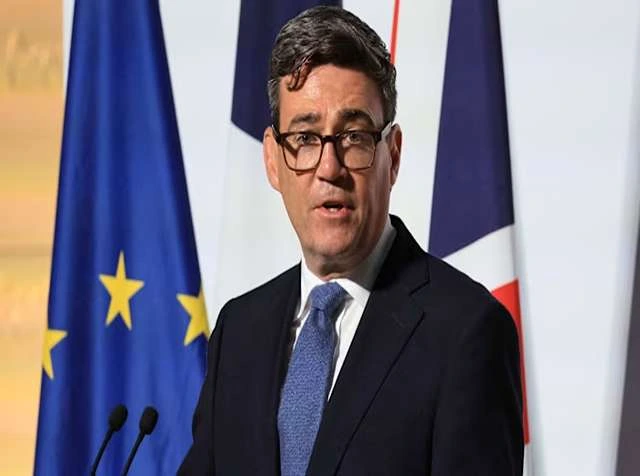
Prime Minister Andy Burnham is due to travel to Dublin on Thursday for the ninth European Political Community summit, where he will meet many European leaders face to face for the first time since taking office in July. The trip opens a two-week push to show that his plan for closer ties with Europe can deliver concrete results.
A week after Dublin, the UK and the European Union are due to hold a formal summit in Brussels on November 20. Bloomberg reports that the two sides are expected to announce deals on youth mobility, agrifood trade and emissions trading at that meeting.
Burnham has said that Brexit did more harm than good, and he argues that a better relationship with the bloc could lift economic growth and give Britain more tools to tackle illegal migration. He says the practical deals now being negotiated will pay off for families, in particular by cutting red tape on food.
But every step toward Brussels also reopens the arguments of the 2016 referendum. A Labour cabinet minister has publicly acknowledged the trade-offs, the Conservatives have put a price tag on the reset, and Reform UK leader Nigel Farage has accused the prime minister of betraying Brexit voters.
The Dublin meeting is not an EU event. The European Political Community brings together leaders from EU and non-EU countries to discuss shared strategic concerns, and Ireland, which currently holds the EU presidency, is hosting it on November 12. An informal meeting of EU heads of state and government follows the next day. Irish Taoiseach Micheál Martin has described the security operation around the two summits as the largest in the history of the state, and said he was confident they would pass off safely despite hoax bomb threats.
For Burnham, the challenge is to win meaningful trade concessions without promising a settlement that lacks lasting support from Parliament, voters or European governments.
What Is on the Table Before the Brussels Summit
Negotiators are already working on youth mobility, agricultural trade and emissions rules, according to Investing.com. The youth mobility scheme, which would let young people from EU countries live and work in the UK, is among the deals under negotiation.
The Mirror reports that the UK is said to be pushing for a cap of about 50,000 arrivals a year, while the EU wants a limit closer to 150,000. Asked about the higher figure, Culture Secretary Lisa Nandy said ministers would hold those conversations with European counterparts and with the British public.
There is also a dispute over education. European negotiators have resisted linking British companies' access to the bloc's industrial strategy with discounted university fees for EU students, insisting that the tuition issue be settled separately, Investing.com reports.
On food, Burnham told the Sunday Mirror that cutting red tape on goods moving in and out of the country would ease pressure on supermarket prices and make life easier for farmers and food producers. He added that working more closely with Europe could drive growth, make the country safer and give the government more tools against illegal migration.
The prime minister also made clear that he does not see the Brussels summit as the limit of what Britain wants from the relationship, setting up a longer debate about how far the government should go.
Burnham's Language on Brexit Has Shifted
Burnham has signalled more flexibility than his predecessor, Keir Starmer, on Britain's long-term relationship with Europe. At the Labour conference in September he said Brexit had caused more damage than benefit, and he has raised the possibility that Britain could one day apply to rejoin the EU, Al Jazeera reports.
In an interview with The Sunday Times in October, he said he wanted an honest discussion about the UK returning to the EU's free movement rules for workers. He argued that the pre-Brexit pattern of workers coming and then going home was different from migration today, and that the balance of migration has changed.
He also said freedom of movement should be seen as part of a broader package that includes data-sharing on migration, noting that Britain lost access to the Eurodac database after leaving the EU.
The context matters politically. Official figures show long-term net migration to the UK nearly halved in 2025, falling to 171,000 from 331,000 a year earlier, after tougher government measures restricted arrivals.
According to Investing.com, the government is weighing options ranging from a tailored economic partnership to a customs union or single-market membership, with eventual EU re-entry also under consideration. Each path carries different costs. Single-market membership would improve trade access but would require accepting free movement, while a customs arrangement could avoid some immigration disputes but would offer narrower economic benefits.
Brussels has been blunt about the price of deeper access. Michel Barnier, the EU's former chief Brexit negotiator, told the BBC that Britain could not rejoin the single market without accepting freedom of movement, and that the bloc would not allow cherry-picking.
Labour Unease and Opposition Attacks
Closer ties are not an easy sell inside Labour. Nandy, who represents the Leave-voting seat of Wigan, told the BBC there are "costs as well as benefits" to a closer relationship with the EU and that the public cannot be cut out of that conversation. She suggested she was not in favour of rejoining the bloc and said most of the benefits promised at the time of Brexit had not been realised.
Investing.com reports that the proposals have unsettled Labour MPs in constituencies that backed leaving the EU in 2016, with some fearing that renewed arguments over migration and sovereignty could strengthen Reform UK ahead of the next election.
Farage reacted to Burnham's remarks on free movement by calling them a "total betrayal of Brexit Britain".
The Conservatives are focusing on cost. Party leader Kemi Badenoch has called the reset a distraction, and the party says its analysis of a leaked draft agreement shows the deal could cost British families more than £1,200 each. It claims taxpayers would face a bill of around £23bn over the next decade, including contributions linked to reducing economic and social disparities between EU regions. The figures come from the Conservatives' own analysis of a leaked text rather than from an official costing.
A separate row broke out on Remembrance Sunday after Nandy issued a statement welcoming Britain's return to the Erasmus+ exchange scheme and linking it to honouring those who served. Conservative chairman Kevin Hollinrake accused her of trying to make "an EU membership pitch" on a national day of remembrance, while Nandy said she strongly disagreed and that the day was not for politicking.
Britain agreed in December 2025 to rejoin Erasmus+ from 2027, with the Cabinet Office saying it would pay the EU about £570m for that year.
What to Watch Next
After Dublin on Thursday and the informal EU leaders' meeting on Friday, attention turns to Brussels on November 20, when the detail of any deals on youth mobility, food trade and carbon markets should become clear.
Expectations in Brussels appear more cautious than the rhetoric in London. Investing.com reports that European officials doubt Britain's more ambitious language will produce immediate changes in negotiations, and that Brussels has other priorities, including talks with Canada on a closer relationship with the bloc.
Public opinion may give Burnham some room. Recent polling cited by Investing.com shows attitudes shifting toward closer European ties, although support for reversing Brexit does not necessarily mean appetite for another prolonged political fight.
That tension sits at the centre of the next fortnight. If the Brussels summit delivers visible gains on food prices and opportunities for young people, Burnham will have a case that closer cooperation pays. If talks stall over caps, tuition fees or free movement, his opponents will argue the reset is costing too much for too little.