


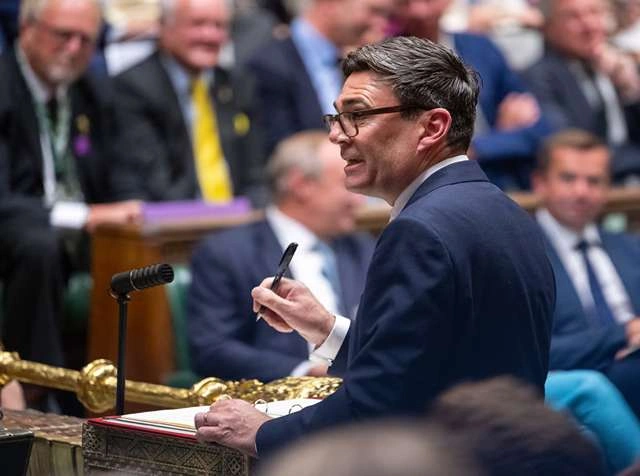
In his first major speech in the House of Commons, UK Prime Minister Andy Burnham promised to go in a new political direction, based on economic renewal, lower costs of living and greater public control of essential services.
In his first statement to the Commons as prime minister, Burnham said Britain needed "substantial change" and the country needed a different approach after decades of economic challenges, political centralization and pressure on public services.
The speech was Burnham's first outing at the dispatch box as UK leader and set out the priorities for his new Labour government.
Burnham Promises New Direction in Politics
His government would work on re-building confidence and restoring optimism across the country, Burnham told MPs.
He said many communities had suffered years of declining living standards, rising costs and a reduced say in decisions that impacted on their daily lives.
The prime minister described his premiership as a break from what he termed an over-centralisation, promising to devolve more power and decision-making to areas outside London.
A major theme of his speech was that government should concentrate on real improvements in the lives of the people rather than political conflict.
Concentrate on Public Control of Essential Services
One of Burnham's key arguments was that essential services should be more in the public interest.
Some of the areas he brought up are Liquids, Power, Transportation and Housing.
More public involvement, the prime minister said, could help to make services more affordable, reliable and responsive. The proposal represents a major change in Labour's approach to increased state involvement in key sectors. But critics have questioned the cost and practicality of extending public ownership.
Critique of Ex-Economic Policies
Burnham gave a speech criticizing economic decisions taken over many decades, including the Thatcher era, austerity and Brexit. He said the decisions had created economic stagnation, weaker communities and fewer opportunities for many parts of the UK.
Burnham said his government would try to deal with what he called long-term problems by putting money into communities and giving communities more power to make decisions locally. Opponents have challenged that analysis, saying earlier reforms also helped economic growth and investment.
Government Makes Regional Growth a Key Priority
Regional development was the central theme of Burnham's administration. The prime minister has pledged to help towns and cities across Britain by reducing the concentration of political and economic power in London.
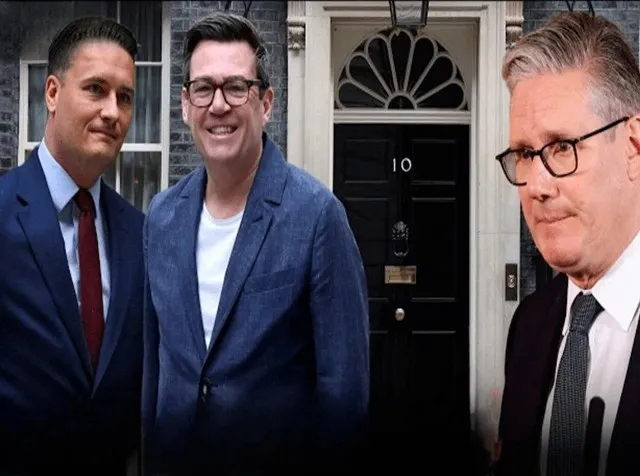
He has proposed creating a larger government footprint outside London, with plans for a new No. 10 North office in Manchester. The move reflects Burnham's background as former mayor of Greater Manchester, where he championed regional decision making and devolution.
Opposition Questions Burnham's Plans
Burnham's proposals were condemned by conservative opposition leader Kemi Badenoch, who said more state control risked taking Britain back to old economic policies. Opposition MPs questioned how the government would pay for the expansion of public services without jeopardising economic stability.
Critics also pressed Mr Burnham for details on areas including taxation, defence spending and welfare policy, The Times reported. Burnham defended his approach, saying change was necessary to deal with long-term national challenges.
Economy and Cost of Living in Central Region
One of the main goals of his government, Burnham singled out, was to ease everyday financial pressures. His priorities include dealing with costs related to Home, Home Loans, Child Care and Bills in the house.
The prime minister said tackling affordability was about economic reform and better public services. But meeting those promises could be challenging given pressure on government finances.
Brexit and the Future Relationship with European Union
Burnham also mentioned Britain's relationship with Europe. He criticized the effect of Brexit on economic growth but said his government was not seeking to reverse the referendum result straight away.
Instead, he spoke in favour of greater cooperation with European countries and suggested that future governments might look at closer ties with the European Union. It remains politically sensitive and continues to divide British politics.
Defence and Global Challenges
Burnham made his first appearance in the Commons at a time of great international uncertainty, with conflicts in Europe and the Middle East. The prime minister has vowed to keep backing Ukraine and has been under pressure over future defence spending commitments. He also reiterated the importance of Britain's international role while focusing on domestic economic priorities.
Burnham Sets Out New Direction For Labour
Burnham's leadership is of a different style to his predecessor, with more emphasis on regional power, public services and community-focused policies. Supporters say his approach could help to rebuild trust among voters who feel alienated from politics at Westminster. Critics say the government needs to provide more precise details on how its ambitious plans will be carried out and paid for.
New Prime Minister Faces Challenges Ahead
But Burnham has some big hurdles to clear, despite the upbeat tone of his first speech.
What the government has to do is Economic Development, Pressures on public spending, Housing shortages, Demands on health care, Defence promises and Worries about migration.
Opposition parties will be watching closely to see if Labour can deliver on its promises and turn them into measurable results.
New Chapter for Labour Government
Burnham used his first Commons speech to set out his political stall and point the way to a new direction for Britain. His message was optimistic: regional empowerment and greater public involvement in essential services.
The test of his premiership will be whether the government can translate those ambitions into policies that lift living standards and sustain economic confidence. Andy Burnham laid out an ambitious vision for a more decentralised and publicly focused Britain in his first speech as prime minister – but the biggest test will be whether his government can deliver the substantial change he promised.