



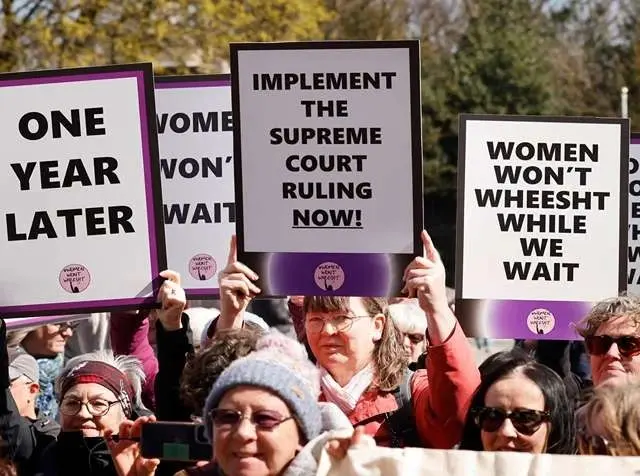
The UK government has published long-awaited guidance on how the Equality Act should be implemented in relation to single-sex spaces across England, Scotland and Wales. The updated code of practice was issued by the Equality and Human Rights Commission (EHRC) following the 2025 Supreme Court ruling which stated that the terms “woman” and “sex” in the Equality Act refer to biological sex. The guidance clarifies how organisations, businesses and public bodies should apply the law in areas such as toilets, changing rooms, hospital wards and other single-sex facilities.
According to the EHRC guidance, if a single-sex service permits access based on gender identity rather than biological sex, the space may no longer qualify legally as “single-sex”. The draft code also says that transgender people can lawfully be excluded from facilities designated for the opposite biological sex where it is considered proportionate and justified. At the same time, organisations are encouraged to provide alternative arrangements such as gender-neutral or mixed-use facilities in order to reduce discrimination risks against transgender people.
The government said the revised guidance is intended to give legal clarity to employers, councils, schools, hospitals and businesses after months of uncertainty following the Supreme Court judgment. The updated code is now subject to parliamentary review before becoming enforceable guidance under the Equality Act framework.
Debate Over Transgender Access and Legal Interpretation
The updated guidance has intensified debate over transgender rights and access to public spaces in the UK. The EHRC guidance states that transgender women should not use women’s single-sex facilities and transgender men should not use men’s single-sex facilities if organisations wish to maintain legal single-sex status. The code also notes that excluding transgender people may be lawful where there is a legitimate aim such as privacy, dignity or safety.
Supporters of the guidance argue that the Supreme Court ruling and the updated code provide legal certainty for women’s spaces and remove confusion for employers and service providers. Women and Equalities Minister Bridget Phillipson said the judgment had made clear that “sex means biological sex” under the Equality Act. Government representatives have also insisted that transgender people continue to retain legal protections under gender reassignment provisions within equality law.
Critics, however, argue that the guidance risks excluding transgender people from everyday public life and could create practical difficulties in workplaces, hospitals and public venues. Some trans rights campaigners accused the EHRC of overreach and warned that the guidance could increase discrimination and social hostility. There are also questions about the practical implementation of the rules and whether organisations could still face legal challenges no matter what approach they took.
Political Reactions and Concern About Delays
The political discussion has also focused on the long delay in the publication of the updated guidance. Critics said businesses and public institutions had been left in uncertainty for more than a year after the Supreme Court ruling. Some MPs described the wait for official clarification as damaging, arguing that organisations needed earlier direction on how to comply with the law.
The EHRC said the revised code was intended to balance legal rights while offering practical solutions. The updated guidance includes references to alternative facilities such as gender-neutral toilets and mixed-use spaces. Officials said the intention was to help organisations remain compliant with equality law while also reducing exclusion and conflict.
Businesses and public bodies have meanwhile expressed concerns about implementation costs and operational difficulties, particularly in older buildings where creating additional facilities may not be straightforward. Earlier versions of EHRC guidance had already been criticised for creating what some organisations described as a legal minefield. The revised code was adapted after consultations and discussions aimed at making the guidance more workable in practice.
The issue continues to generate strong reactions across UK politics and civil society, with campaign groups on all sides arguing that the outcome will shape future debates around equality law, women’s rights and transgender inclusion in Britain.