



The UK economy grew by 0.7% between July and September, its strongest quarterly performance since the start of 2024, according to figures published by the Office for National Statistics (ONS) on Thursday, 12 November. Growth picked up from 0.5% in the spring quarter and left GDP 1.9% higher than a year earlier, as households and businesses kept spending despite the energy-price shock that followed the outbreak of the Iran war.
The headline figure was in line with what City economists had forecast, but the monthly detail was firmer than expected. The ONS said GDP rose 0.2% in September, when analysts had pencilled in no growth, after a flat August, which was revised down from an earlier 0.1% gain, and a 0.4% increase in July.
Services and Technology Lead the Way
Services did most of the work, rising 0.9% over the quarter, with business-facing services up 1.0% and consumer-facing services up 0.5%. Information and communication grew 2.1%, led by a 4.4% jump in computer programming and consultancy, which the ONS described as the largest single driver of GDP growth across 2026. The statistics office said many of the firms reporting the biggest turnover gains were involved in artificial intelligence and cloud computing, although it added that the way its data is collected makes it difficult to put an exact figure on the effect. Administrative and support services rose 4.1%.
Grant Fitzner, the ONS chief economist, said the quarter’s growth was robust and came almost entirely from strong and widespread gains in services. Thirteen of the 20 subsectors of the economy grew, while education and the accommodation and food sector each shrank by 0.5%.
Construction Falls as Households and Investment Hold Up
Production edged up 0.1%, helped by a 0.9% rise in manufacturing, while construction output fell 0.7% and was 1.7% lower than a year earlier, dragged down by a 4.7% drop in new private housing work. On the spending side, household consumption rose 0.6% and government consumption also increased by 0.6%. Real GDP per head rose 0.7%.
Investment in fixed assets climbed 1.7%, but business investment grew by only 0.4%. Reuters reported that this was half what economists had expected and the weakest rise since the start of the year.
How the UK Compares With the G7
ONS comparisons show that among G7 economies with figures available, only the United States, at 0.8%, grew faster than the UK in the third quarter. Canada expanded by 0.3% and Germany by 0.2%, Italy was flat and France contracted by 0.1%. Japan’s figure was not yet available.
Government and Bank of England Reaction
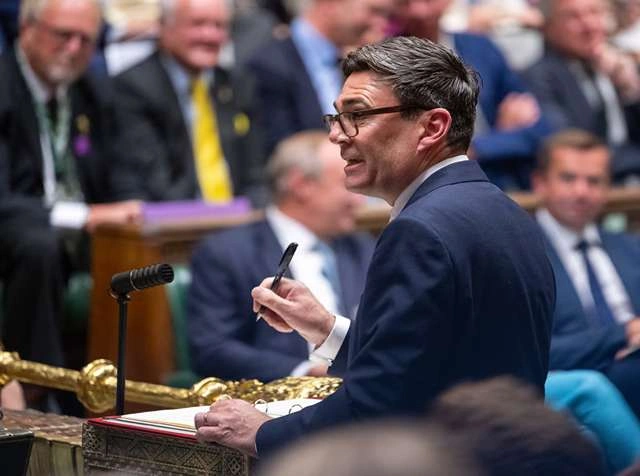
Prime Minister Andy Burnham called the figures “welcome news”, saying the economy was growing despite a year in which events around the world had pushed up costs at home, and promised to stay focused on bills, jobs, high streets and business growth, City AM reported. In a separate statement, Chancellor John Healey said the economy was showing stand-out resilience.
The data arrives days after the Bank of England raised Bank Rate by a quarter-point to 4% on 5 November, its first increase since August 2023. The Monetary Policy Committee voted 8–1, with one member backing a larger half-point rise. Reuters reported that the Bank also upgraded its 2026 growth forecast alongside the move. Rob Wood, chief UK economist at Pantheon Macroeconomics, noted that monthly GDP has now beaten consensus for five months in a row, and Reuters said the Bank faces pressure to raise rates again in December.
Strong Quarter, Cooler Outlook
Economists do not expect the pace to last. Sanjay Raja, chief UK economist at Deutsche Bank, said before the release that growth was likely to cool in the final quarter of 2026 as higher inflation and interest rates begin to weigh, while pointing to data centres, IT, defence and aircraft as key sources of business investment, the Press Association reported. Looking further ahead, City AM reported that the Office for Budget Responsibility expects the energy-price spike to pull growth down to 1% next year, while the National Institute of Economic and Social Research forecasts 1.1%.
The ONS stressed that the quarterly figure is a first estimate and may change as more survey and administrative data arrive. Since 2000, first estimates have on average been revised up by 0.08 percentage points. The next quarterly GDP update is scheduled for 22 December.