

Britain’s competition watchdog has warned that McCormick’s planned $44.8 billion takeover of most of Unilever’s global food business could leave UK shoppers with less choice. In a decision published on 11 November, the Competition and Markets Authority (CMA) said the deal gives rise to a realistic prospect of a substantial lessening of competition in two supermarket categories: dry ingredient mixes and dry sauces.
McCormick and Unilever have until 18 November 2026 to offer undertakings that would address the problems the CMA has identified. If they do not, or if the proposals are judged insufficient, the regulator will refer the merger for an in-depth Phase 2 investigation.
What the CMA Found
The Phase 1 review looked at the overlap in the UK between McCormick, the US spice and condiment group behind the Schwartz and French’s brands, and Unilever Foods, whose UK brands include Knorr, Maille and Colman’s. The CMA said it has jurisdiction over the deal because the UK turnover of each business is above £100 million.
To reach its view, the regulator drew on submissions from both companies, their internal business documents, and evidence from customers and competitors.
Why Dry Mixes and Sauces Are the Concern
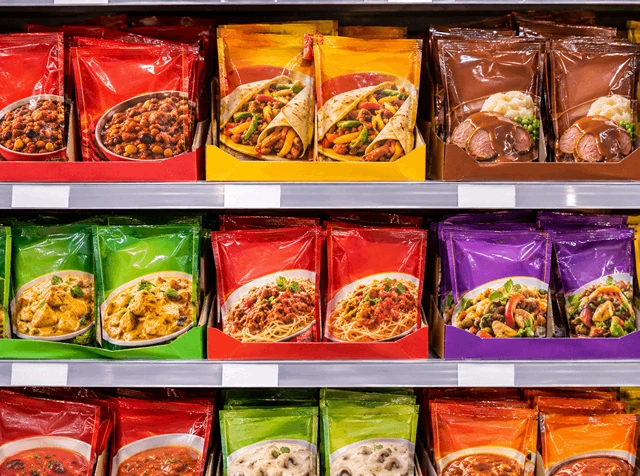
The CMA concluded that the merger would bring together the two largest branded suppliers of dry ingredient mixes, such as the packs used to make a chilli con carne, and of dry pour-over sauces such as parsley sauce. The combined business would be the largest supplier in both categories by far, and the CMA found that the two companies compete closely with each other.
Rival products do exert some pressure, according to the regulator. It pointed to Maggi in dry ingredient mixes and Bisto in dry sauces, alongside supermarket own-label ranges, but judged that these alternatives place only a limited constraint on the two merging companies.
The CMA also doubted that new competitors could step in to fill the gap. It said entry and expansion are difficult in both categories because shelf space in supermarkets is limited and existing suppliers are well established, and it saw no significant growth in the markets that would change that.
Mustard Cleared, Colman’s Up for Sale
The CMA found no realistic prospect of competition problems in mustard, a category where both companies own well-known brands. McCormick sells American-style mustard under French’s, while Unilever offers English-style mustard under Colman’s and French-style mustard under Maille.
Evidence from large supermarkets indicated that shoppers do not see the three styles as substitutes, so retailers stock each one. The CMA therefore treated them as separate markets with no overlap between the companies, and no retailer raised concerns that the merged business could use strength in one style to harm rivals in another.
The clearance follows a decision by Unilever in August to put the Colman’s brand and its assets up for sale in order to address potential competition concerns early. Unilever has said discussions with potential buyers are progressing well.
The $44.8 Billion Deal Behind the Review
McCormick announced in March that it would combine with the majority of Unilever’s food division, a business whose best-known brands include Hellmann’s mayonnaise and Knorr. Under the terms reported by Bloomberg, McCormick would pay $15.7 billion in cash, while Unilever and its shareholders would receive shares equivalent to 65% of the combined company. Unilever PLC would also gain the right to appoint members of the McCormick board.
The transaction, valued at about £33.8 billion according to Alliance News, is expected to complete by mid-2027, and McCormick plans to seek a secondary listing in London. The deal remains conditional on clearance from competition authorities, including the CMA.
Company Response and Market Reaction
Unilever described the CMA’s decision as an expected step in the regulatory process and said it is working constructively with the watchdog on a suitable remedy. McCormick took a similar line, saying it continues to make good progress on regulatory approvals globally and remains confident of a timely closing.
Markets showed little alarm. On the morning of the announcement, Unilever shares were 0.2% lower at 4,928 pence in London, while McCormick shares were marginally lower in pre-market trading in New York at $46.70.
What Happens Next
The next milestone is the 18 November deadline. Under UK merger control, a Phase 1 finding of competition concerns gives the companies the chance to offer undertakings in lieu of a reference, which are commitments designed to resolve the problem without a full Phase 2 inquiry. The CMA will then decide whether any offer is enough to remedy its concerns at the Phase 1 standard.
If nothing is offered, or the CMA is not satisfied with what is put forward, the case goes to Phase 2, which could add time to a deal the companies want to close by mid-2027. Industry coverage notes that remedies in cases like this can include the sale of selected businesses or assets, although the CMA has not approved any remedy here.
The products at the centre of the review are everyday cupboard staples, and the CMA’s findings focus on how much choice would remain on UK supermarket shelves if two of the biggest brands in the aisle were brought under one owner.